Shelter Winery
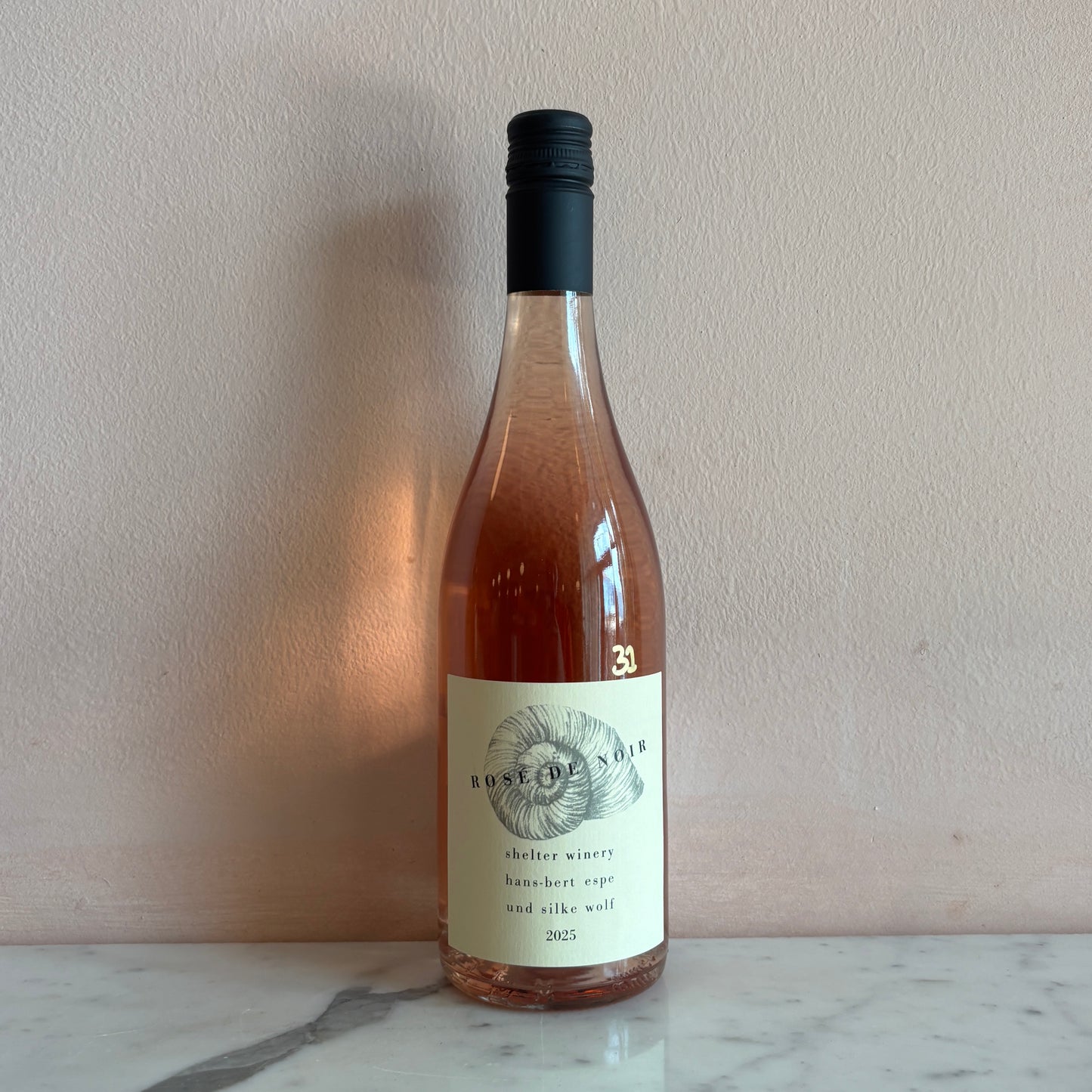
Shelter Winery "Rosé de Noir" Baden, Germany 2025
Shelter Winery "Rosé de Noir" Baden, Germany 2025
In stock
Couldn't load pickup availability
FROM VOM BODEN:
THE WINE: Shelter makes extraordinarily delicate, fragrant Pinot Noir in Baden, a region mostly known for wines that tend to be big bruisers with a lot of lumber. This rosé is ultra bright and tart, whispering intensity and lacy minerality that characterize every wine from this humble husband-and-wife team.
THE PRODUCER: The vineyards of Hans-Bert and Silke (as well as Sven Enderle and Florian Moll) are north of the Kaiserstuhl. To be fair, they’re only about a half-hour north. But a lot changes in those thirty-or-so minutes. First, you have a much cooler microclimate, with the Black Forest cooling down the area. Second, the volcanic soils of the Kaiserstuhl give way to limestone and loess. You can likely see where this is going: Pinot Noirs with lower alcohols and higher acidities.
Originally, the name of the winery, Shelter, came from the old Canadian hanger that they rented at the beginning of their journey. For a few years now they’ve been in a smart new winery that they designed and built and which combines what I think are the key philosophies of the estate: style and simplicity. The barrel room and cellar, while not dug into the ground, has the ground piled on top of it; a beautiful garden of wild flowers insulates the estate. Solar panels to the right power it (see top right picture).
The vineyard and cellar work is just as straightforward. No herbicides or pesticides are used in the vineyards; harvest is done completely by hand. In the cellar, a short cold soak is followed by a delicate press (normally the stems are removed, though this can differ from vintage to vintage) and fermentation in open-top vessels (see above). Once fermentation is complete, the juice is transferred into barrel, with the few new barrels being outnumbered by those with up to five years of age.