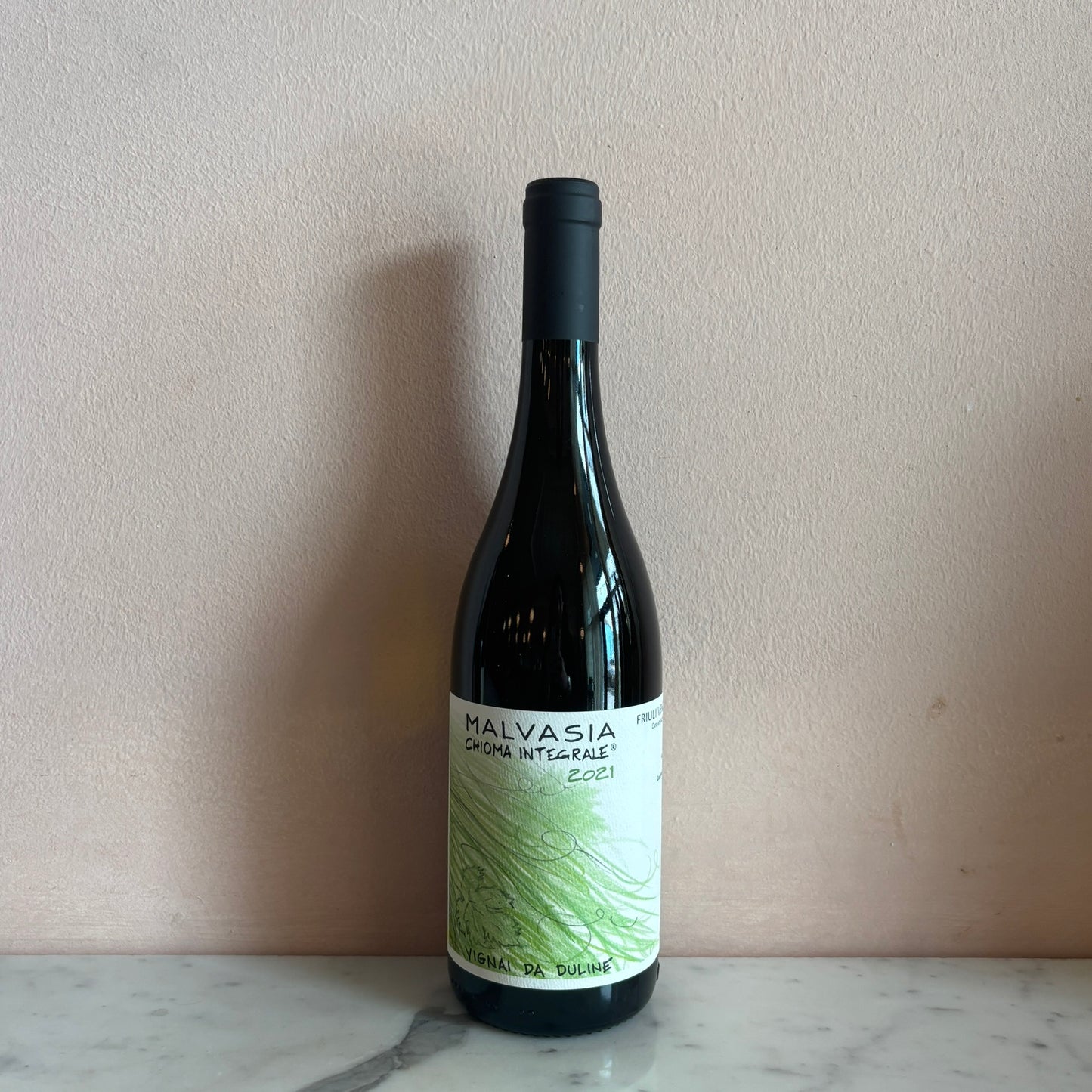
Vignai da Duline
Vignai da Duline "Chioma Integrale" Malvasia Istriana, Friuli, Italy 2021
Vignai da Duline "Chioma Integrale" Malvasia Istriana, Friuli, Italy 2021
Low stock
Couldn't load pickup availability
FROM KERMIT LYNCH:
THE WINE: 100% Malvasia Istriana. Chioma in Italian means “long hair” and “canopy of tree leaves.” This relates to the Duline vineyard management philosophy where they do not trim the vines during the growing season. The vines are allowed to have “long hair” or are free to grow their canopy. This is true from all Duline vines, not just the Malvasia.
THE PRODUCER: In the late 1990s Lorenzo Mocchiutti and wife Federica Magrini inherited a few hectares of vines from Lorenzo’s grandfather. These vineyards, mostly neglected for decades, were planted primarily with old vines of local grape varieties like Tocai Giallo, Malvasia Istriana, Tocai Fruilano, and Schioppettino, as well as more common varieties like Pinot Grigio, Chardonnay, and Merlot. Today, their holdings cover seven hectares divided between hillsides and flatlands, including Ronco Pitotti, one of the oldest hillside vineyards in Friuli, with vines dating back to the 1920s. Their respectful, holistic approach to vineyard management is summed up in their philosophy of “No Trimming the Shoots” and “No Herbicides.” Though it is generally accepted that vines are trimmed of excess leaves or fruit to concentrate a vine’s efforts toward healthy bunches of grapes, Lorenzo and Federica let their vines find their own balance, choosing not to trim any of their vines. In addition to this unconventional practice, they do not use herbicides to prevent growth of unwanted vegetation between rows of vines. Instead they plant a type of alfalfa, erba medica, that when cut acts as a natural fertilizer.