Paolo Bea
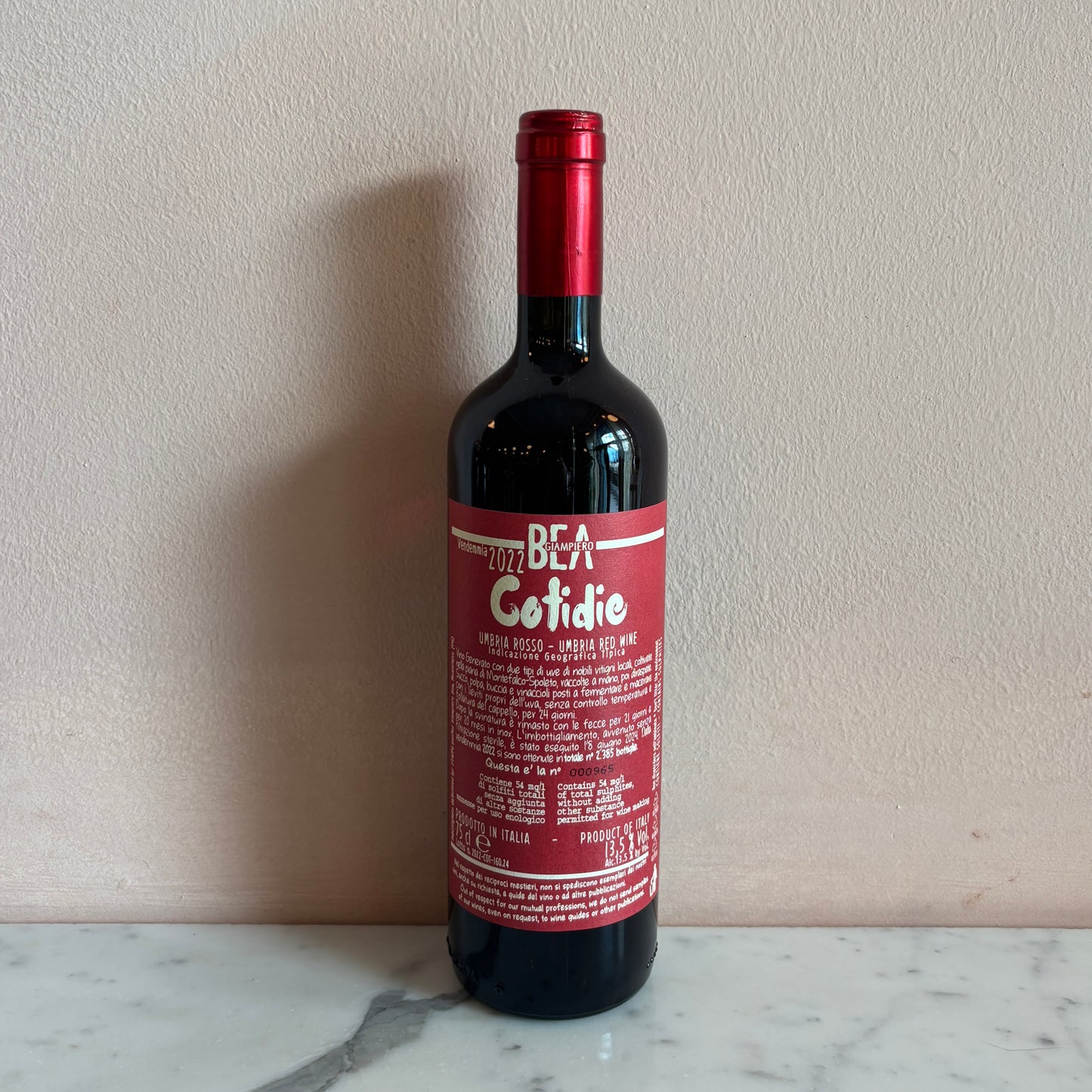
Paolo Bea "Cotidie" Rosso, Umbria, Italy 2022
Paolo Bea "Cotidie" Rosso, Umbria, Italy 2022
Low stock
Couldn't load pickup availability
FROM ROSENTHAL:
THE WINE: Sagrantino (50%) and Trebbiano (50%). “Cotidie” Umbria Rosso: “Cotidie” (“quotidian” in Latin) was conceived as an “everyday” wine for its relatively easygoing and drinkable spirit. The methodology behind it feels outré today but would have been common practice for the ancients to whom its Latin name pays tribute: a co-fermentation of both red and white grapes—in this case, Sagrantino and Trebbiano—grown in close proximity to one another, and yielding a lip-smacking wine that’s hard to pigeonhole. In its vibrant ruby color, it sits in the interzone between a dark rosato and a light red, and it offers the heady spice we all love in Bea’s Sagrantino, albeit on a softer, lighter frame.
THE PRODUCER: References in the archives of Montefalco, the beautiful hill town in Umbria, document the presence of the Bea family in this locality as early as 1500. Azienda Agricola Paolo Bea is a classic Italian fattoria, producing wine, raising farm animals for trade and home consumption, and working the land to produce olives, fruits, and vegetables. At the time Neal began working with the family in the late 1980s, a young and ambitious Giampiero Bea was learning the ropes alongside his father Paolo—a through-and-through farmer with an Umbrian dialect so thick as to be nearly incomprehensible to outsiders. Paolo produced shockingly expressive wines using a bare minimum of technology, and while these staunchly old-school wines were out of step with the modernization-happy Italian trends of the 1980s and 1990s, they resonated deeply with Neal and with our clients—and they continue to do so decades later. Giampiero has long been at the helm of Azienda Agricola Paolo Bea, and his commitment to healthy farming and low-intervention cellar work has made him a pillar in the Italian natural wine community. But it is Paolo’s approach—so bred-in-bone as to seem instinctual—that guides the estate to this day, given voice and definition through Giampiero’s remarkable work.