El Piraña
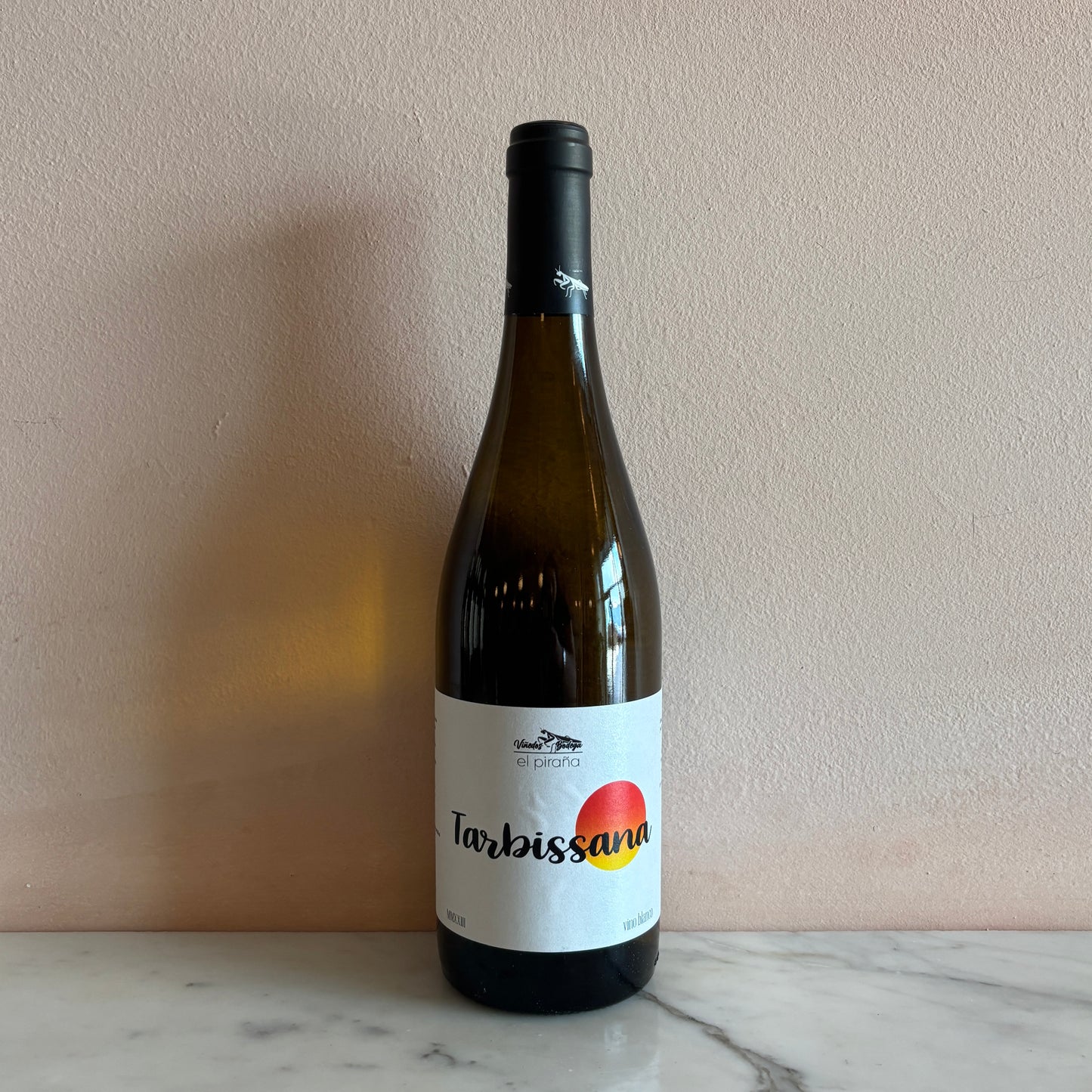
El Piraña "Tarbissana" Andalucia, Spain 2023
El Piraña "Tarbissana" Andalucia, Spain 2023
In stock
Couldn't load pickup availability
FROM JOSÉ PASTOR:
THE WINE: Tarbissana is Palomino Fino from a mix of parcels across the estate’s 4 hectares of vines in Trebujena, averaging 35 years in age and planted on lustrillo Albariza soils. The grapes were harvested by hand and direct pressed into 80% stainless steel tanks and 20% into old botas. After fermentation finished without temperature control, the wine rested in the same vessels for 8 months before bottling without fining or filtration and aged an additional year in bottle before release.
THE PRODUCER: Juan Francisco Pulido Cabral's (nickname, El Piraña) family has a long history of grape growing in the town of Trebujena along the Guadalquivir River northeast of Sanlúcar de Barrameda. The vineyards, planted mainly to Palomino Fino, cover 4 hectares over three pagos, La Rosa, La Cruz, and Alventus, and range in age from 25 to 40 years old. Juan Francisco inherited the vines, converted by his father to organic farming in the 1990s, in 2011. In the past, the family sold their grapes to larger sherry houses, never making their own wines. With declining prices and less demand for grapes, Juan Francisco quickly realized he needed to change, and he began pressing his crop and selling the must in 2012. Over the next few years, his musts began to attract attention and win awards at the yearly tastings - and Juan Francisco started to think about making his own wines.
In 2023, after years of planning and the construction of a bodega, Juan Francisco joined this revolution in the region's wine production and bottled the first El Piraña wines from his 2022 vintage. From this point forward, his award-winning musts will go into his own wines. Juan Francisco works simply in the cellar, fermenting with native yeasts and working with stainless steel tanks and the traditional old botas of the Sherry region. The single Pago wines (Alventus and La Rosa) develop a brief flor, but the focus is on the character of the fruit rather than the biological notes produced by the veil. To achieve this, he fills the botas higher than is typical to ensure less influence from the flor.