Château Guilhem
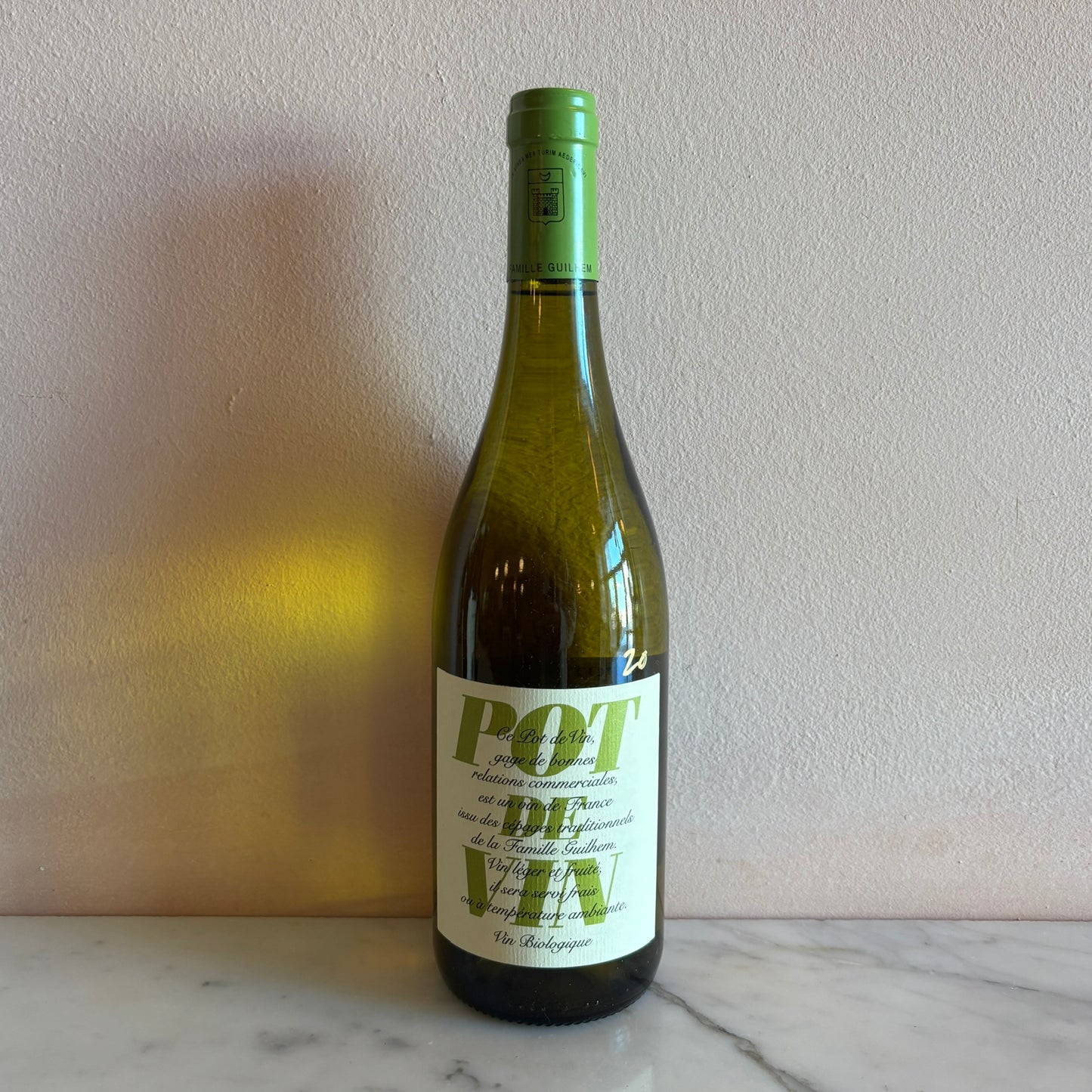
Château Guilhem "Pot de Vin" Chardonnay, Languedoc-Roussillon, France 2024
Château Guilhem "Pot de Vin" Chardonnay, Languedoc-Roussillon, France 2024
Low stock
Couldn't load pickup availability
FROM BOWLER WINE:
THE WINE: In 2015, chateau owner Bertrand Gourdou was searching through an old desk when he came across a label that his grandfather had made in the early 1970's; that wine was called "Le pot-de-vin" which, in French, translates to "the bribe", which for that era was an audacious play on words for a wine label! This label inspired Bertrand to make a simple, natural wine: biodynamically grown fruit, fermented with native yeast and with a negligible dose of SO2, made in concrete tanks built by his grandfather. The word "pot" also references the old-style bottle shape.
Most of this estate's production is red, but they have a small number of Chardonnay vines planted too, which yield this succulent, freshly styled wine. Grown in the southern sun and vinified in concrete vats (no oak) at 13.7% alcohol, this wine is astonishingly bright and quenching with aromas of white flowers, a light tropical fruit middle, and a crisp-creamy finish. Certified organic like all the wines in the Pot de Vin line from Chateau Guilhem , it is a pleasure to sip or serve with light fare, vegetables and fish of all stripes.
THE PRODUCER: Situated in Malepère, the most westerly region of the Languedoc, Château Guilhem was built in 1791. Then the property of the Marquis de Auberjon, it was bought by the Guilhem family in 1878. Bertrand is the fifth generation of his family to run the estate.
The thirty-five hectares of vineyards are planted mainly to Bordeaux varieties— Cabernets Sauvignon and Franc, Merlot, and Sauvignon Blanc— with some Chardonnay. There are some plantings of Grenache and Cinsault as well, that are used entirely for the rosé. Despite the vineyards' proximity to the Mediterranean, the climate here actually sees quite a bit of influence from the Atlantic; in addition, the soil here is atypical of the rest of the region, with a high proportion of calcareous sandstones. These stones help the soils to retain moisture over the winter so that the vines can flourish in the summer. The grapes are grown organically, with some biodynamic parcels as well, out of respect for both the vines and for the people who work them. The cellar was built in the late nineteenth century; old casks and concrete tanks stand next to modern stainless steel vats. Bertrand pulls both from older traditions and modern ideas in order to produce fresh, aromatic wines.