
APRIL 2026: SPRITZ SPRING
Bottles to keep your bar bubbly and fortified.
Shop this month's in-stock wines:
-

Pianora Wermut Erborista XII
Regular price $46.00 USDRegular price -
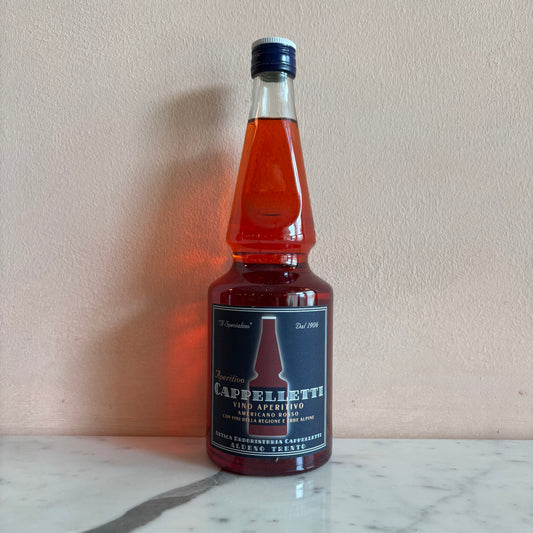
Cappelletti Vino Aperitivo
Regular price $20.00 USDRegular price -

Carboniste "Gomes Vineyard Albariño" Andrus Island, California 2024
Regular price $35.00 USDRegular price


A decade ago last month, my former business partner and I wrote a book called SPRITZ. I joke that I’m going to die having only written a book about sparkling cocktails, but looking back, it really was a great book that we researched the hell out of and drank hundreds of spritzes in the name of. In the course of said research, we ran around north Italy along what we dubbed “the spritz trail,” hunting down the places where sparkling wine, red bitters, and soda water came together in a glass. We rolled through Venice, Turin, Milan, Valdobbiadene, and environs, and generally made a lot of merry, while also finding out exactly why it is that the combination of these things continues to hold the imagination of the world. Spritzes, simply, convey a sense of sprezzatura—the art of appearing effortless, something severely lacking in the age of performance.
This month, I’m quietly celebrating the 10-year anniversary of SPRITZ (I might even buy some copies for the shop), and reminding you that we have a really lovely selection of spritzes on our menu that change seasonally. In addition, our spirits shelves are always bursting with a rainbow of vermouths, liqueurs, red bitters, and fortified wines that are most at home mixed with anything bubbly, seltzer water to sparkling wine. Spritz here, spritz at your house, spritz all spring long. Here are a few things to get you started. —Leslie Pariseau
Les Lunes White Vermouth
Much of the time, when we think of sweet vermouth, we go directly to red vermouth, often of the Italian leaning. It’s a staple of the Manhattan, the Negroni, and Boulevardier, but its pale cousin sweet white vermouth, or vermouth bianco, is a kind of secret weapon for adding texture and flavor to drinks while also keeping things light. The difference between the two is simply the wine base. Where sweet red vermouth uses red white grapes, sweet white vermouth uses white wine grapes.
In the case of Les Lunes—a California outfit that leases vineyards across Northern California to achieve old-school yet super fresh and natural expressions of the state’s terroir—petit manseng is used for the white wine base. It’s a thick-skinned grape most often used in southern France to make Jurançon, a beguilingly spicy and sometimes sweet wine, which works beautifully in this springy iteration of vermouth bianco when infused with wormwood, grains of paradise, rose, chamomile, lemon, grapefruit, and coriander. When drunk alone, the chamomile comes through with a fuzzy warmth, the other herbs working in a chorus of savory spice.
Mixed together with the Carboniste (see below), a little seltzer, and a lemon peel over ice, it’s makes a beautiful textural spritz that feels a layer more interesting than a spritz has the right to be. (Try it at 1.5 oz vermouth to 5 oz sparkling wine.) When the bottle of sparkling is gone, simply toss it with seltzer and tonic over ice and continue spritzing into summer. Or you can use my Martini secret, and add a quarter ounce to your usual Martini recipe (I like a 2:1, gin to vermouth + orange bitters combo). Adding a whisper of sweet to strong acts the same way salt in sweet desserts does—an unexpected, undetectable layer of complexity.
Carboniste "Gomes Vineyard Albariño" Andrus Island, California 2023
Earlier this year, we welcomed Carboniste’s winemaker Dan Person into the shop to teach a mini-class on sparkling wines the California way in which he walked us through the more technical aspects of just how grapes find their way to an effervescent manifestation. Focused on entirely sparkling wines (with the exception of one passetoutgrains red), Dan and Jacqueline founded Carboniste in California as a means of showcasing how the state shows up in wines with a bubble. The Carboniste Abariño is a perennial favorite at the shop for its salted almond, coastal breeze ease. The grape is often associated with Spain or Portugal, and is in fact sourced from a vineyard on Andrus Island, a swampy spit of land in the Sacramento River planted and tended by the Gomes who brought the vines from Portugal in the 1800s.
Of course, it’s lovely to drink alone, but should you feel inclined, it comes together with the Les Lunes vermouth for a spritz that is grown with 100% Californian sunshine and made with 100% Californian ingenuity.
Cappelletti Vino Aperitivo and Cocchi Americano Bianco
If I had to name the top five spritz ingredients to stock on any bar, it would include both Cappelletti Aperitivo and Cocchi Americano. They are both a bit like a bartender’s ketchup—endlessly mixable and universally beloved—while also acting like an entire cocktail in a bottle.
Back in the early 2000s when cocktails were still a novelty, mothballed from the heyday of the 1950s and ‘60s, the importer Haus Alpenz was quietly amassing a library of ingredients that never stopped being produced in Europe. When it comes to spritzes, having your own edited library is the key to being extra laissez-faire when it comes to building them on the fly when you’re ready to hit the parade route or a brigade of friends shows up. Red bitters, vermouths, and Americanos are indispensable.
Aperitivo Cappelletti, known in Trentino-Alto Adige as “Specialino” is part of the red bitter category, but, it’s also almost a vermouth with its wine base (not all red bitters are), including trebbiano, garganega, and pinot bianco. Colored with carmine, it has the body of a vermouth and the punch of a red bitter—really is a cocktail in a bottle—which needs no more than soda water to make it a spritz, however, add it to the Sommariva and you’ve got an EXTRA-PINK drink that’s equal parts dry and bittersweet.
Cocchi Americano occupies a specifically European category of fortified wines flavored with gentian, a medicinal plant that is present in many amari and liqueurs. This moscato-based aperitif comes from the storied vermouth house Cocchi, which was born in Piedmont from a winemaker in the late 19th century. While I was writing SPRITZ with Talia, it made its way into dozens of our test recipes, including one that continues to be one of my favorite spritzes of all time, the Punch House Spritz: 2 oz Cocchi Americano, 1 oz fresh grapefruit juice, 4 oz dry sparkling rosé, 1 oz soda water.
Sommariva "Il Rosa" Rosato Spumante Brut, Veneto, Italy NV
Of course, no true Italian spritz would be complete without Italian sparkling. Produced from rabosa and pinot noir grapes, prosecco producer Sommariva’s “Il Rosa” is the platonic ideal of a dry sparkling rosato wine. Blushing strawberries, dry raspberry snap, and fluffy bubbles are a fresh base on which to build any of the ingredients from this month’s club.
Pianora Wermut Erborista XII
Since Pianora has arrived to New Orleans from Disco Liquids through importer Selection Massale, we’ve had either the Wermut or the cherry-infused Aperitivo on the menu as a fortified pour or in a royale. Crafted from the merlot and cabernet sauvignon vines of a teeny-tiny vineyard + orchard in Brescia near Franciacorta, the Wermut is flavored with three kinds of wormwood, citrine sandalwood, and quinine, and colored with carmine. It’s unctuous, savory, and sweet, the perfect combination for adding to sparkling wine. At the shop, we pour four ounces of our house prosecco Caneva da Nani over half an ounce of Wermut for a lightly herb-fruited afternoon cocktail. Add a Luxardo cherry for extra luxury.